• Skip to primary navigation
  • Skip to main content

A Healthy Tomorrow

Building Wellness Into The Next Generation

  • Home
  • Change 1 Thing
  • Blog
  • Favorite Resources
  • Building The Village
  • About Dr. T

Blog

Turning Your Health Conscious Attitude into Positive Community Impact

January 6, 2026 by admin Leave a Comment

Health isn’t just a personal priority—it’s a collective force. Every individual who values wellness carries a spark that can influence others, shape environments, and inspire change. Whether you’re passionate about fitness, nutrition, mental health, or healthcare access, that passion can become a public good when directed toward advocacy.

The Essence in One Breath

  • Ordinary citizens can spark extraordinary health improvements through local action.
  • True advocacy begins with empathy, education, and persistence.
  • Community well-being grows when personal health values turn into shared initiatives.
  • Anyone—regardless of profession—can become a health advocate with structure, clarity, and consistency.

The Power of Local Voice

Before large-scale change occurs, it starts small—often in one neighborhood, one school, one town hall. Community health advocacy works because it’s personalized. You understand what your community lacks and what it values. From setting up wellness workshops to lobbying for better playgrounds or nutritious school lunches, local activism bridges the gap between awareness and action.

When you channel personal passion into civic energy, you give voice to those who can’t speak up. A health advocate’s influence isn’t measured by how loud they shout, but by how deeply they listen and how persistently they act.

Forms of Health Advocacy and Their Impact

Type of Action Description Example Outcome
Educational Campaigns Increase awareness of a health issue through events or media Reduced misinformation about vaccines
Policy Engagement Launch a petition or collaborate with local government for reform New bike lanes or healthier school meals
Volunteer Programs Offer time or resources to underserved groups Regular wellness checks for seniors
Peer Leadership Lead by example through consistent healthy habits Inspiring fitness communities or clubs
Business Initiatives Create social enterprises around wellness Affordable access to health resources

Starting a Health-Based Business

Sometimes advocacy grows beyond volunteer work—it becomes an enterprise with purpose. Launching a health-based business allows you to create sustainable impact while generating income. Whether you’re developing a wellness app, opening a nutrition café, or offering mental health workshops, clarity of mission matters more than scale.

You’ll need to manage logistics like business formation, licensing, compliance, and financial organization. That’s where resources such as ZenBusiness can help by offering an all-in-one platform for forming an LLC, managing legal requirements, building a website, and handling finances—all the back-end essentials that free you to focus on your impact mission.

Business can be advocacy when it balances profit with purpose, structure with soul.

FAQ: Everyday Advocacy, Simplified

Q1: Do I need professional credentials to advocate for health?
No. While expertise helps, passion and commitment are often enough to start local initiatives. You can partner with nonprofits and other professionals for credibility as projects scale.

Q2: What if I don’t have funding?
Begin with low-cost efforts—community cleanups, awareness posts, or small events.

Q3: How can I avoid burnout while advocating?
Set boundaries. Advocacy is a marathon, not a sprint. Prioritize self-care and delegate tasks when possible.

Q4: How can I measure my impact?
Use both qualitative and quantitative indicators: testimonials, participation rates, or improved access metrics.

Quick Resource Highlight: Grassroots Health Movement

If you want to connect with a network of citizen advocates focused on public wellness, explore the Grassroots Health Movement. This nonprofit offers open-source health data, education, and citizen-science projects to empower individuals with evidence-based advocacy tools. It’s a valuable space for anyone ready to turn awareness into organized action.

Amplify Your Message

  1. Document Stories: Collect and share testimonials that humanize your cause.
  2. Leverage Local Media: Small-town news outlets often feature advocacy initiatives.
  3. Use Visuals: Data visualization makes complex topics digestible.
  4. Stay Consistent: Advocacy loses power when it becomes sporadic.
  5. Celebrate Wins: Recognizing milestones keeps morale and momentum high.

Conclusion

Health advocacy isn’t reserved for professionals—it’s an act of citizenship. When your concern for well-being extends beyond your doorstep, you become part of something regenerative and powerful. Every campaign, conversation, and community act adds to the health equity movement. Start where you are, use what you love, and watch the ripple expand.

Submitted by Jason Kenner
Filed Under: Dr. T's Blog Tagged With: advocacy, health, health advocate

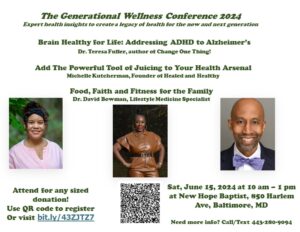
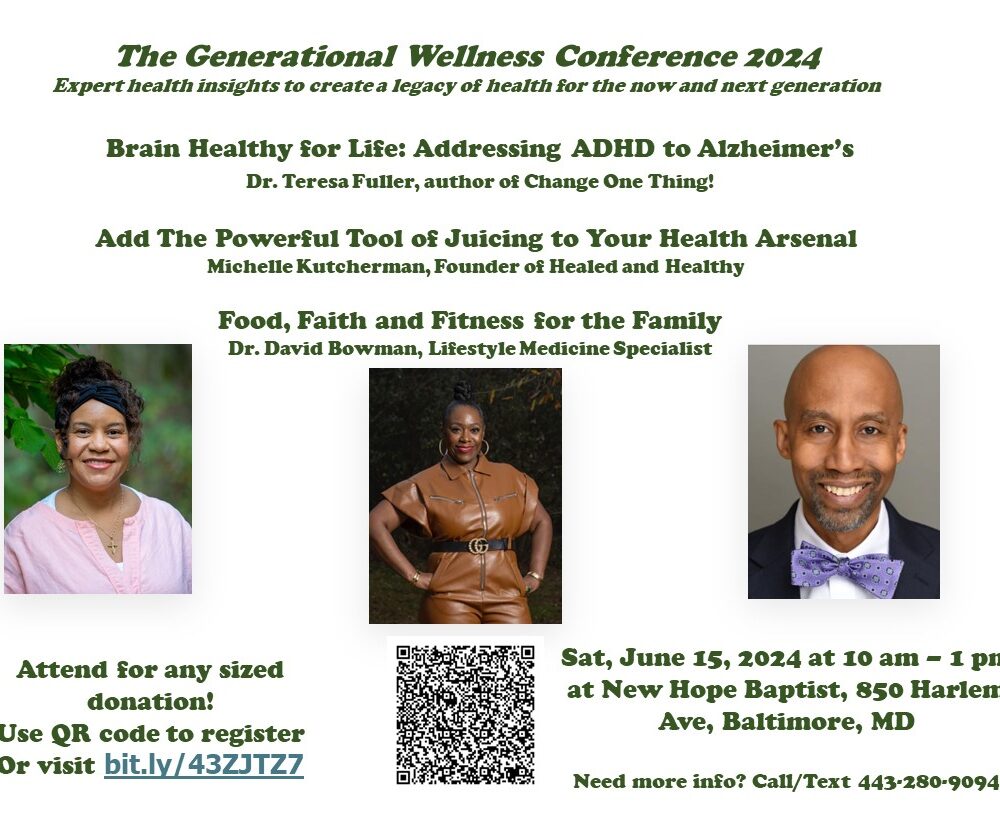
The Generational Health Conference 2024

March 18, 2024 by admin

Join us on June 15th to learn about brain healthy living, the power of juicing, fitness tips and more!

Register Here

Filed Under: Dr. T's Blog, front-page Tagged With: ADHD, Alzheimers, brain health, family health, health, juicing

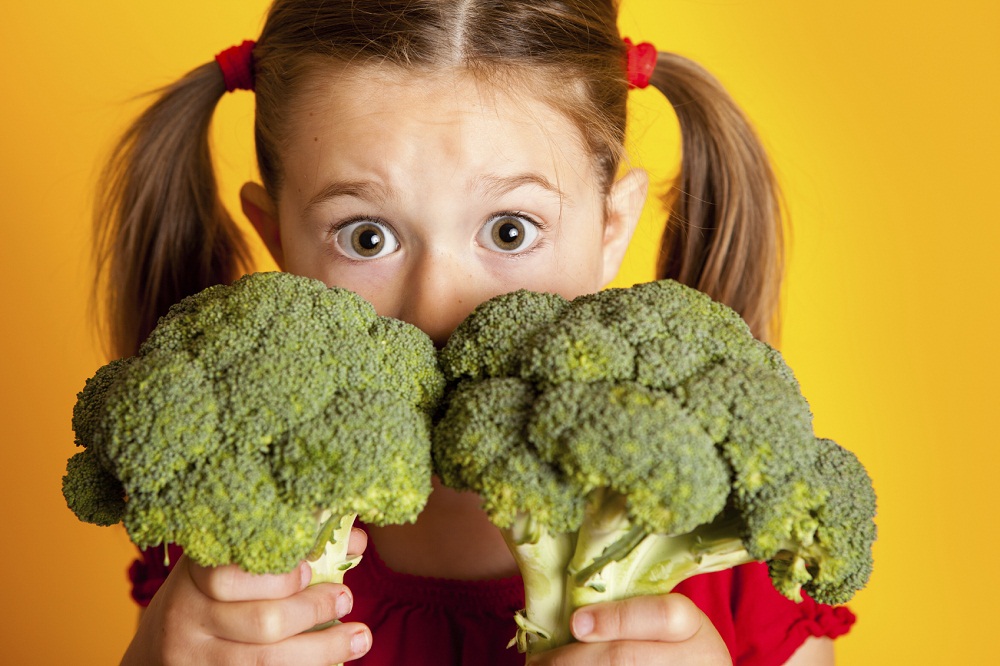
Creative Ways to Get Your Kids to Appreciate Vegetables

May 15, 2023 by admin

If American kids had disposable incomes, they’d probably buy groceries like every day was Halloween – reams of Twizzlers, bushels of candy corn, and pounds of M&M’s, Reese’s, and Kit Kats. Unfortunately, the popular US diet (for adults as well as kids) has its consequences. Namely, 39.6 percent of adults are obese. (Obesity is defined as having a BMI over 30.)

Perhaps even more alarming, about one in three US adolescents or teens is overweight or obese. The health risks associated with excess weight include sleep apnea, osteoarthritis, kidney disease, type 2 diabetes, and certain cancers. That’s why it’s important to teach your kids to eat well: so that they grow up to be healthy, active adults. To do so, this might mean coming up with creative ways to inspire your children to appreciate and enjoy that most dreaded of meals: vegetables. Here are some helpful tips to get you started courtesy of guest blogger Jason Kenner.

Farmers Market

If your kids eat at the school cafeteria every day, their idea of “healthy food” might narrow down to neon-colored peas or pineapple chunks smushed into plastic ramekins. To teach them about the bounty and splendor of vegetables, take them to a farmers market. You may not know yourself that these markets offer interesting and unusual veggies. From Kohlrabi, Jerusalem artichokes, and green zebra tomatoes to Romanesco broccoli with its intricate coral-like patterns, the offerings can be as lush and varied as perennials in a plant nursery! Letting your kids pick vegetables out of the booths might prove to be enough of a hands-on experience to get them at least familiar with some of the healthiest foods in the world.

Raised Vegetable Beds

If there aren’t many farmers markets in your area, you might consider planting a raised vegetable bed. All you need is to hammer four planks (preferably cedar, since it’s rot-resistant) into a box. Dig out a square gulch, not too deep, in your backyard and fit the box over it and fill it with manure and fertilizer. Then, poke your finger through the surface to make rows where you plant your seedlings. Each vegetable has its own preference regarding sun, shade, moisture, and the month of the year to put it in the ground, but you’ll get all that down. And when you do, you’ll be feeding your kids heirloom tomatoes all summer long, right out of your garden.

Something else to bear in mind: if your backyard needs some additional modifications, as an added bonus, many kinds of home renovations can also increase the appraisal value of your home. Just make sure you keep those receipts!

Delicious Meals

Parents don’t have loads of free time, so serving your kids gorgeous vegetable medleys may seem preposterous. If so, then try looking up recipes meant to be simple weeknight fare. These might include quesadillas, spaghetti with lentils, tortilla or minestrone soup, or spaghetti squash burrito bowls. Making vegetables a staple of your kids’ diet from a young age may help them eat well for the rest of their lives, a routine that will prove invaluable to their health as they get older.

It’s also essential that your kids are drinking enough water every day. Not only will they avoid the extra sugar that comes with soda and juices, but drinking water removes toxins, prevents dehydration, and regulates body temperature.

Parenting Tricks

Meanwhile, if all these tips fail to lure your kids away from McDonald’s and Arby’s, try good old parenting trickery. Dress up your platter o’ asparagus or broccoli with a dab of butter (which is better for you than you might think) or a fun dip. Make them pick their vegetables out of your raised garden beds so that they can participate in the (suburban) farm-to-table process on their own. Finally, eat vegetables yourself, keep them out as appetizers during meals, and don’t pressure your kids to swallow every wedge of cauliflower on their plates. The less you stress about the importance of eating vegetables, the less they’ll latch onto it as a point of contention, until it’s simply part of your household’s regular diet.

Dr. Teresa Fuller is a pediatrician with an expertise in integrative holistic medicine. If you have any questions, don’t hesitate to reach out!

Filed Under: Dr. T's Blog, front-page, Health Conditions Tagged With: brain health, child health, healthy child, nutrition, obesity

Reversing the impact of the pandemic on childhood obesity

August 30, 2022 by admin

What if we tackle child obesity like we tackled the COVID 19 pandemic? My interview on KevinMD here

Happy Daddy And His Cute Little Daughter Putting Chopped Cucumber Into Salad Bowl In Kitchen, copy space

Filed Under: Dr. T's Blog, front-page, Wellness Tips Tagged With: child health, holistic health, lose weight, nutrition, obesity, weight loss

Sleep Smarter Tips by Shawn Stevenson

June 15, 2022 by admin

Get 21 tips on better sleep here: https://themodelhealthshow.com/sleep-problems-tips/

Filed Under: front-page Tagged With: help with sleep, i can't sleep, insomnia, sleep, sleep problems, sleep smarter, sleep tips

5 Key Nutrients to Feed Your Child’s Brain

September 30, 2021 by admin

Click below to go my article in Best Holistic Life magazine to optimize your child’s brain health!

Filed Under: front-page, Health Conditions Tagged With: brain food, brain health, healthy brain, holistic health, holistic life

Next Page »

Copyright © 2026 · Wellness Pro on Genesis Framework · WordPress · Log in