• Skip to primary navigation
  • Skip to main content

A Healthy Tomorrow

Building Wellness Into The Next Generation

  • Home
  • Change 1 Thing
  • Blog
  • Favorite Resources
  • Building The Village
  • About Dr. T

Dr. T's Blog

Turning Your Health Conscious Attitude into Positive Community Impact

January 6, 2026 by admin Leave a Comment

Health isn’t just a personal priority—it’s a collective force. Every individual who values wellness carries a spark that can influence others, shape environments, and inspire change. Whether you’re passionate about fitness, nutrition, mental health, or healthcare access, that passion can become a public good when directed toward advocacy.

The Essence in One Breath

  • Ordinary citizens can spark extraordinary health improvements through local action.
  • True advocacy begins with empathy, education, and persistence.
  • Community well-being grows when personal health values turn into shared initiatives.
  • Anyone—regardless of profession—can become a health advocate with structure, clarity, and consistency.

The Power of Local Voice

Before large-scale change occurs, it starts small—often in one neighborhood, one school, one town hall. Community health advocacy works because it’s personalized. You understand what your community lacks and what it values. From setting up wellness workshops to lobbying for better playgrounds or nutritious school lunches, local activism bridges the gap between awareness and action.

When you channel personal passion into civic energy, you give voice to those who can’t speak up. A health advocate’s influence isn’t measured by how loud they shout, but by how deeply they listen and how persistently they act.

Forms of Health Advocacy and Their Impact

Type of Action Description Example Outcome
Educational Campaigns Increase awareness of a health issue through events or media Reduced misinformation about vaccines
Policy Engagement Launch a petition or collaborate with local government for reform New bike lanes or healthier school meals
Volunteer Programs Offer time or resources to underserved groups Regular wellness checks for seniors
Peer Leadership Lead by example through consistent healthy habits Inspiring fitness communities or clubs
Business Initiatives Create social enterprises around wellness Affordable access to health resources

Starting a Health-Based Business

Sometimes advocacy grows beyond volunteer work—it becomes an enterprise with purpose. Launching a health-based business allows you to create sustainable impact while generating income. Whether you’re developing a wellness app, opening a nutrition café, or offering mental health workshops, clarity of mission matters more than scale.

You’ll need to manage logistics like business formation, licensing, compliance, and financial organization. That’s where resources such as ZenBusiness can help by offering an all-in-one platform for forming an LLC, managing legal requirements, building a website, and handling finances—all the back-end essentials that free you to focus on your impact mission.

Business can be advocacy when it balances profit with purpose, structure with soul.

FAQ: Everyday Advocacy, Simplified

Q1: Do I need professional credentials to advocate for health?
No. While expertise helps, passion and commitment are often enough to start local initiatives. You can partner with nonprofits and other professionals for credibility as projects scale.

Q2: What if I don’t have funding?
Begin with low-cost efforts—community cleanups, awareness posts, or small events.

Q3: How can I avoid burnout while advocating?
Set boundaries. Advocacy is a marathon, not a sprint. Prioritize self-care and delegate tasks when possible.

Q4: How can I measure my impact?
Use both qualitative and quantitative indicators: testimonials, participation rates, or improved access metrics.

Quick Resource Highlight: Grassroots Health Movement

If you want to connect with a network of citizen advocates focused on public wellness, explore the Grassroots Health Movement. This nonprofit offers open-source health data, education, and citizen-science projects to empower individuals with evidence-based advocacy tools. It’s a valuable space for anyone ready to turn awareness into organized action.

Amplify Your Message

  1. Document Stories: Collect and share testimonials that humanize your cause.
  2. Leverage Local Media: Small-town news outlets often feature advocacy initiatives.
  3. Use Visuals: Data visualization makes complex topics digestible.
  4. Stay Consistent: Advocacy loses power when it becomes sporadic.
  5. Celebrate Wins: Recognizing milestones keeps morale and momentum high.

Conclusion

Health advocacy isn’t reserved for professionals—it’s an act of citizenship. When your concern for well-being extends beyond your doorstep, you become part of something regenerative and powerful. Every campaign, conversation, and community act adds to the health equity movement. Start where you are, use what you love, and watch the ripple expand.

Submitted by Jason Kenner

Filed Under: Dr. T's Blog Tagged With: advocacy, health, health advocate

Change 1 Thing! December Challenge

November 30, 2024 by admin

“Change 1 Thing” Challenge

Have You Accepted the Challenge?

Take One Year to Develop a Lifetime of Optimal Health!

The “Change One Thing” Challenge is a 12 step process over one year to help you achieve your health goals.  You simply commit to make one change in your lifestyle every month, so that by the end of the year, you will have completely transformed to a healthy lifestyle.  Why each month?  It takes about 21 days to establish a new habit.  So each month, you will firmly establish one change before starting another.  Are you willing to take the challenge?

Your December Challenge (should you choose to accept it):

“I Will Optimize my Daily Diet with the Proper Supplements”

Most people are confused about supplements.  Should I take a multivitamin?  What about the news that vitamin E and Vitamin A may increase the risk of cancer?  Should I take aloe vera for good skin?  Do I need extra Zinc?  If I eat a balanced diet, do I need any supplements at all?

Actually, everyone should take supplements for the following reasons:

  • Our food supply is woefully lacking in vitamin and mineral content.  Many of our fruits, vegetables and grains have only a fraction of the nutrients they had half a century ago
  • The National Cancer Institute recommends that we eat 7 to 13 servings of fresh fruits and vegetables per day. Most Americans do not eat even half of that

While people with different illnesses will need specific supplements, here is a list of the three supplements almost everyone can benefit from:

Whole Food Supplements

Omega 3 Fatty Acids

Vitamin D

1) Whole Food Supplement: Whole food supplements are dehydrated, cold-processed plant foods in a powder that provide concentrated vitamins and minerals in their whole state.  That’s important because our bodies are designed to process nutrients from food, not to process fractionated chemicals.

Whole food supplements are completely superior to multivitamins because:

  • our bodies only absorb about a small fraction of synthetic vitamins! That bright yellow urine that you see after you’ve taken a vitamin is the majority of your hard-earned money in the toilet.   
  • the fractionated chemicals that compose typical vitamins are ineffective.  As stated by Dr. Timothy O’Shea:

“Vitamins cannot be isolated from their complexes and still perform their specific life functions within the cells.   When isolated into artificial commercial forms, like ascorbic acid, these purified synthetics act as drugs in the body.   They are no longer vitamins, and to call them such is inaccurate.”

  • Megadoses of vitamins can be toxic.   For example, several recent large studies indicate that people with high levels of vitamin A in their blood have a greater risk for osteoporosis.

2) Omega 3 Fatty Acid

Omega 3 fatty acids are important for:

Brain development and function: beneficial for concentration and coordination

Heart health: reduce triglycerides, cardiovascular events, atherosclerosis and heart arrhythmias

Reduces inflammation: therefore is beneficial for arthritis, asthma and numerous other illnesses

All cause mortality is reduced

3) Vitamin D

Boosts the immune system

Improves bone health

Reduces inflammation

Supports heart health

Reduces insulin resistance in diabetes

      Don’t forget to continue your:

January habit of drinking at least 8 glasses of water per day (1/2 your weight in ounces of water per day)

February habit of eating 7 to 9 servings of fruit and vegetables per day

March habit of replacing refined white foods with whole grains

April habit of exercising for at least 30 minutes 3 times per week

May habit of detoxifying your system daily

June habit of sleeping for 7 to 8 hours each night

July habit of Eating early, eating often and stopping before it’s too late!

August habit of Increasing Omega 3 Fatty Acids in your diet

September habit of sharing a home-cooked meal with your family at least 3 times per week

October habit of reducing your media diet

November habit of practicing stress-reducing strategies

Filed Under: Change one thing, Health Conditions

Change 1 Thing November Challenge

October 31, 2024 by admin

“Change 1 Thing” Challenge

Have You Accepted the Challenge?

Take One Year to Develop a Lifetime of Optimal Health!

The “Change One Thing” Challenge is a 12 step process over one year to help you achieve your health goals.  You simply commit to make one change in your lifestyle every month, so that by the end of the year, you will have completely transformed to a healthy lifestyle.  Why each month?  It takes about 21 days to establish a new habit.  So each month, you will firmly establish one change before starting another.  Are you willing to take the challenge?

Your November Challenge (should you choose to accept it):

“I Will Start Practicing Stress-Reducing Strategies Every Day”

80% of diseases are stress related!  How does stress contribute to disease?  Life stress causes the body to release catecholamines and cortisol which are chemical and hormones that contribute directly to cardiac risk by:

• Increasing blood pressure

• Increasing blood thickness (making it more prone to clot)

• Increasing inflammation

• Increasing production and release of triglycerides from the liver

• Increasing LDL (bad cholesterol)

You can’t avoid stress, because life happens.  But you can protect your body and your mind from being damaged by stress.  So here are 4 strategies to protect your body against the effects of stress:

  • Exercise: Exercise reduces stress hormone release, and the effect last for hours after exercise is finished.  Exercise also makes you feel good, by causing the release of endorphins (feel good chemicals) in the brain.
  • Choose Optimism:  Studies have shown that people who reported high levels of optimism had a 55% lower risk of death from all causes, and a 23% lower risk of cardiovascular death. 
  • Get connected: Intentional connection (group support), interpersonal connection (marriage, friendship, pets), and community connection (participation in church groups and social groups) have all been shown to decrease life stress.  On the other hand, social isolation is a significant risk factor for coronary artery disease, cancer, and all-cause mortality.  Therefore, maintaining relationships with family and friends is important to your health.
  • Meditate: Meditation has been shown to reduce stress hormone levels, and to decrease the “fight or flight” response that the body assumes when you’re stressed out.  But this shouldn’t surprise us.  The Bible constantly encourages us to meditate.  And meditate simply means to focus your thoughts on something, or to reflect on something.  It means to “think on these things.”  Meditation works best when it is a daily practice.  The Bible encourages us to meditate:

“…on God’s wonderful works” Ps 145:5

“on God’s promises” Ps 119: 148

“on God’s unfailing love” Ps 48:9

“on whatever is true, whatever is noble, whatever is right, whatever is pure, whatever is lovely, whatever is admirable—if anything is excellent or praiseworthy—think about such things.”

      Don’t forget to continue your:

January habit of drinking at least 8 glasses of water per day (1/2 your weight in ounces of water per day)

February habit of eating 7 to 9 servings of fruit and vegetables per day

March habit of replacing refined white foods with whole grains

April habit of exercising for at least 30 minutes 5 times per week

May habit of detoxifying your system daily

June habit of sleeping for 7 to 8 hours each night

July habit of Eating early, eating often and stopping before it’s too late!

August habit of Increasing Omega 3 Fatty Acids in your diet

September habit of sharing a home-cooked meal with your family at least 5 times per week

October habit of reducing your media diet

Filed Under: Change one thing, Health Conditions Tagged With: healthy lifestyle, self care, stress reduction

Change 1 Thing! October Challenge

September 30, 2024 by admin

“Change 1 Thing” Challenge

Have You Accepted the Challenge?

Take One Year to Develop a Lifetime of Optimal Health!

“Change One Thing” is a 12 step process over one year to help you achieve your health goals.  You simply commit to make one change in your lifestyle every month, so that by the end of the year, you will have completely transformed to a healthy lifestyle. Are you willing to take the challenge?

Your October Challenge (should you choose to accept it):

“I Will Restrict My Media Diet”

How is television (and other media) making us unhealthy?

Advertisements.

  • Several studies looked at food advertising on tv.  One study found that during Saturday morning television aimed at kids, 91% of foods advertised were high in fat, sodium or added sugars and low in nutrients.
  • Another study found that if you eat a diet consisting of the foods advertised during prime time and Saturday mornings, you will eat 25 times the recommended servings of sugar, 20 times the recommended servings of fat, and less than half  the recommended servings of fruits, vegetables and dairy.  The food promoted also contains low quality grains (ie mostly refined, low-fiber grains), and a deficiency of many important minerals and vitamins such as calcium, magnesium and vitamin E.
  • Content: The content of television has changed; it’s now much more fast-paced and flashy. A recent study showed that just 9 minutes of watching fast-paced cartoons resulted in a significantly worse performance on executive functioning tasks (like organization and time-management) compared to the same amount of time watching educational programming or drawing.
  • Time: Five hours of television daily adds up to 35 hours per week, almost equivalent to a full-time job, thereby  monopolizing time that could be used doing more family-friendly and healthy activities
  • Impact on Mental Health: Increased screen time is associated with attentional problems and poorer school performance.
  • Health: TV and video game time compete for physical activity, and therefore contribute to overweight. Studies have found that kids who watch too much television, and get too little physical activity are 3 to 4 times more likely to be overweight than kids who follow the recommended time in front of a screen and being active.

So what should our media diet be?

  • For kids less than 2, the American Academy of Pediatrics recommends no screen time. Children in this age group learn much more effectively by interacting with a person rather than a screen.
  • For kids older than 2, no more than 2 hours of good-quality programming per day.
  • Adults: No official recommendation, but be the role-model by limiting your own screen time

What can you expect from this one change?

  • Weight loss: by replacing screen time with more physical activity, you will be on your way to achieve a healthy weight
  • Improved mood: Physical activity releases hormones that improve our mood
  • Better school performance and reading ability

Suggestions to make it happen

  • Give your children fun alternatives to screen time
  • Keep children’s bedrooms television free
  • Turn the tv off at bedtime

Don’t forget to continue your:

January habit of drinking at least 8 glasses of water per day (1/2 your weight in ounces of water per day)

February habit of eating 7 to 9 servings of fruit and vegetables per day

March habit of replacing refined white foods with whole grains

April habit of exercising for at least 30 minutes 3 times per week

May habit of detoxifying your system daily

June habit of sleeping for 7 to 8 hours each night

July habit of Eating early, eating often and stopping before it’s too late!

August habit of Increasing Omega 3 Fatty Acids in your diet

September habit of sharing a home-cooked meal with my family at least 3 times per week

Filed Under: Change one thing Tagged With: brain health, child health, media, overweight, weight loss

Change 1 Thing! September Challenge

August 31, 2024 by admin

Change 1 Thing” Challenge

Have You Accepted the Challenge?

Take One Year to Develop a Lifetime of Optimal Health!

The “Change One Thing” Challenge is a 12 step process over one year to help you achieve your health goals.  You simply commit to make one change in your lifestyle every month, so that by the end of the year, you will have completely transformed to a healthy lifestyle.  Why each month?  It takes about 21 days to establish a new habit.  So each month, you will firmly establish one change before starting another.  Are you willing to take the challenge?

Your September Challenge (should you choose to accept it):

“My Family will Share a Home-Cooked Meal Together at Least Five Times Per Week”

Now that the summer is coming to an end and the kids are back in school, most of us are settling back into a daily routine.  Let me encourage you to make family meals part of your daily routine.  If not every day, at least 3 times per week.

Unfortunately, fewer families are sharing meals together.  But studies show that children who eat with their families more often are less likely to be overweight.  Why is that?  Most likely, because the home-prepared meals that the children are eating are more healthy than bought foods.  And at the table, the parent is able to influence the child’s attitudes toward healthful diets. 

And the rewards extend far beyond a healthy weight.  One study even showed that asthma symptoms are decreased in children who eat more often with their families.  Here are some other research-proven benefits that children experience from frequent family meals:

  • Formation of healthy eating habits in the future
  • Decreased future substance use and eating disorders in girls
  • Improved emotional well-being in adolescents
  • Increased intake of vegetables
  • Increased intake of vitamins and minerals

Tips for making it work:

  • Make the family table a media free zone.  That is, turn off the television, prohibit cell phones and computers at the table.  That will help everyone at the table give their attention to one another.
  • Always have plenty of fruits and vegetables on the table.  Kids are more likely to eat the healthy options when they are right in front of them.
  • Plan ahead and use quick cooking methods such as sautéing and broiling for healthy and quickly prepared meals.

Does it matter what you eat?  Of course!  Healthy meals will include a variety and abundance of fruits and vegetables, whole grains, and infrequent fried foods.  Use the food plate below for a guide.

      Don’t forget to continue your:

January habit of drinking at least 8 glasses of water per day (1/2 your weight in ounces of water per day)

February habit of eating 7 to 9 servings of fruit and vegetables per day

March habit of replacing refined white foods with whole grains

April habit of exercising for at least 30 minutes 3 times per week

May habit of detoxifying your system daily

June habit of sleeping for 7 to 8 hours each night

July habit of Eating Early, eating often and stopping before it’s too late!

August habit of Increasing Omega 3 Fatty Acids in your diet

Filed Under: Change one thing, Health Conditions

Change 1 Thing! August Challenge

July 31, 2024 by admin

Change 1 Thing” Challenge

Have You Accepted the Challenge?

Take One Year to Develop a Lifetime of Optimal Health!

The “Change One Thing” Challenge is a 12 step process over one year to help you achieve your health goals.  You simply commit to make one change in your lifestyle every month, so that by the end of the year, you will have completely transformed to a healthy lifestyle.  Why each month?  It takes about 21 days to establish a new habit.  So each month, you will firmly establish one change before starting another.  Are you willing to take the challenge?

Your August Challenge (should you choose to accept it):

“I will Protect my Heart and Brain by Enriching my Diet with

Omega 3 Fatty Acid Power!”

You mean, fats can be good for you?  The right kind of fats are more than good – they’re essential.  Recently, omega-3 fatty acids have become all the rage.  Why?  First, they play a critical role in reducing risk of cardiovascular disease by:  1) anti-platelet activity; platelets cause clotting of the blood, and therefore, can lead to poor circulation,  2) triglyceride reduction; of course high triglycerides are a risk factor for cardiovascular disease, 3) increased HDL cholesterol (the good cholesterol as it’s called, because it prevents atherosclerosis). 

Omega-3 fatty acids are also a great brain health nutrient.  Our brains are 60% fat, and therefore, healthy fats are needed to support the structure and function of the brain.  The omega-3 fatty acids called DHA and EPA are essential for proper brain structure, and communication of brain cells.  Also, by lowering inflammation, omega 3s protect against neurological (such as Alzheimer’s) and psychological (such as depression) conditions.

Dr. Alan Logan states “dietary and supplemental omega-3 fatty acids may be the most significant brain insurance policy you can purchase.”

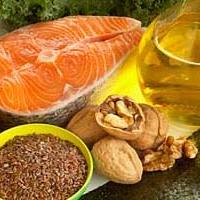
Good sources of omega-3 fatty acids are:

fatty fish, such as salmon and tuna

 nuts (such as walnuts and almonds) and

seeds (e.g. pumpkin seeds)

Omega-3 fatty acid supplements

      Don’t forget to continue your:

January habit of drinking at least 8 glasses of water per day (1/2 your weight in ounces of water per day)

February habit of eating 7 to 9 servings of fruit and vegetables per day

March habit of replacing refined white foods with whole grains

April habit of exercising for at least 30 minutes 3 times per week

May habit of detoxifying your system daily

June habit of sleeping for 7 to 8 hours each night

July habit of Eating Early, eating often and stopping before it’s too late!

Filed Under: Change one thing, Health Conditions

Next Page »

Copyright © 2026 · Wellness Pro on Genesis Framework · WordPress · Log in